
Get Out
TAoN No. 192: Some place-based writing prompts from Write Out. Plus a new Icebreaker, and more.
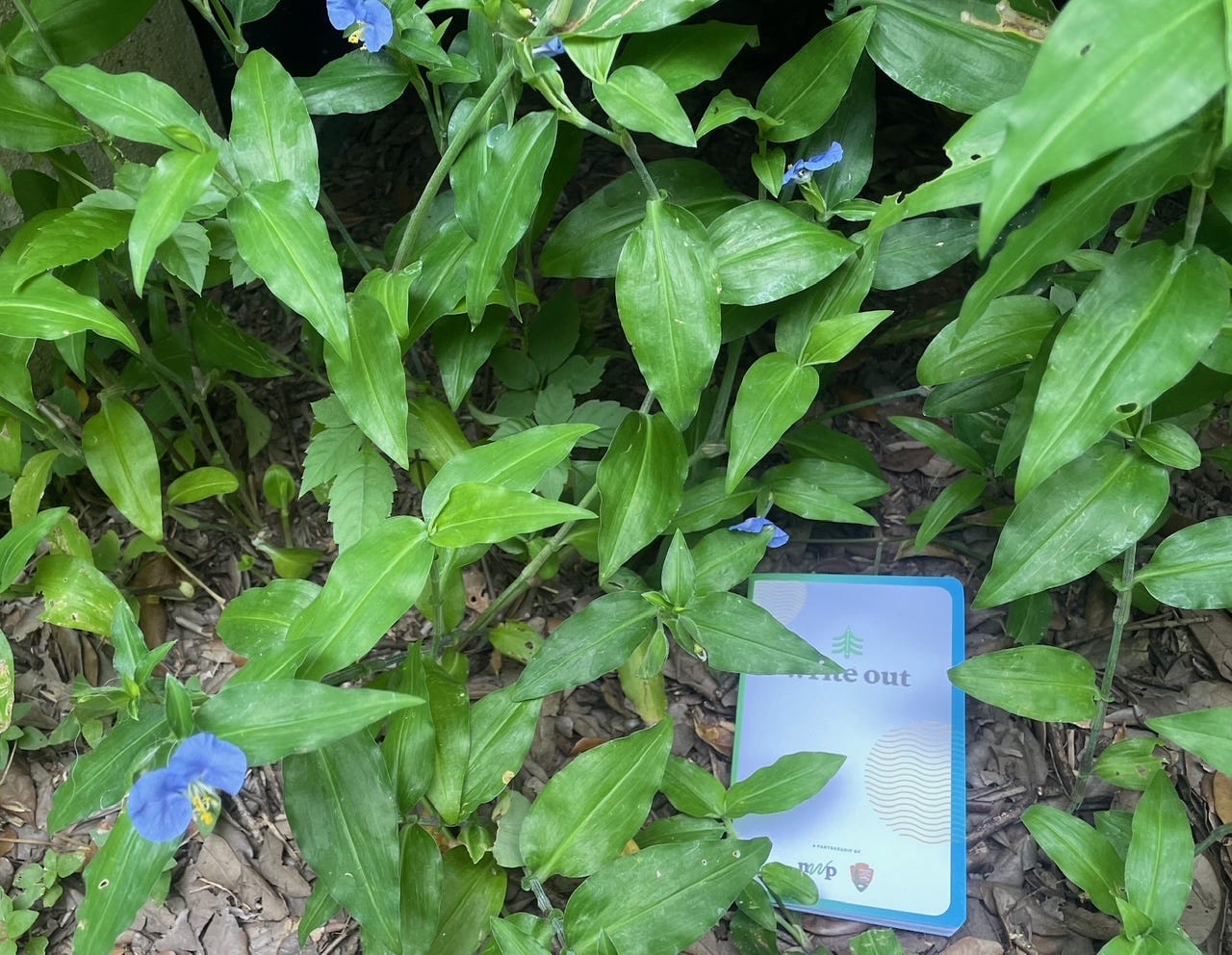
Depending on the weather where you are — and it’s baking hot here in New Orleans — this may not be the best time to hang around outside.
Nevertheless, I have an outdoor focus today: Specifically, I’m going to talk about (and share some prompts from) Write Out, an annual undertaking of the National Writing Project, developed in conjunction with the National Park Service.
Write Out has been around since 2018, and the core idea is pretty simple: get outside, and write. Write about your environment, write to your environment, observe and attend to nature, use the craft of writing to sharpen your senses, and use your senses to sharpen your writing. “The goal is to be inspired by the world around us and to connect and learn through place-based writing and sharing,” the NWP writes.
Of course you can do that any time, but Write Out is a kind of open-to-anyone annual two-week event, which the NWP promotes through various prompts and resources aimed at educators, but available to all. This year Write Out happens October 12–26, with the theme, Awaken The Senses — which I obviously love.
I’ll have more to say about that at a later date (and you can get updates and news from the NWP here). But meanwhile NWP’s past prompts for, really, anyone, are available right now.
In 2024 the theme was “poetry for the planet,” with a collection of prompts and ideas gathered here. These range from creating a “found poem” out of words on signage and other public texts, to adopting former poet laureate Ada Limón’s natural wonders theme via her assignment: What would you write in response to the landscape around you?
But maybe the most intriguing are the batch of prompts from actual National Park rangers. You can click through last year’s suggestions (including videos) here, but I’ll list a few of my favorites:
“Find a place of quiet. Pause there for five minutes. Use your senses to experience. Write what you experience. What is nature telling you?”
“Write a ‘things to do’ poem: Pick a plant, animal, or thing and imagine what kind of actions it performs.”
“Create an Ode: a poem that is about one thing that you think is truly amazing or praiseworthy.”
“We know that some trees can ‘talk’ to each other through their root systems. What kind of messages might trees send to each other?”
“Take a moment to observe nature and write a haiku inspired by your experience.”
These work even if the outdoors you have access to doesn’t quite hit National Park standards. In fact I should add a bit of context.
I learned about Write Out when the wonderful people of the NWP allowed me to sit in on a bit of their annual conference earlier this summer here in New Orleans. Write Out is just one NWP initiative, but I was really sold on the payoff of stepping outside in an observational frame of mind when our presenters made us go up to the conference hotel’s roof deck and write a nature-inspired haiku.
After all, it’s one thing to sit around and promise yourself to appreciate The Great Outdoors, some time in the future. It’s something else to attend to The Available Outdoors, right now.
I’m normally not a big haiku guy, but I just loved the very non-awe-inspiring space we worked with:
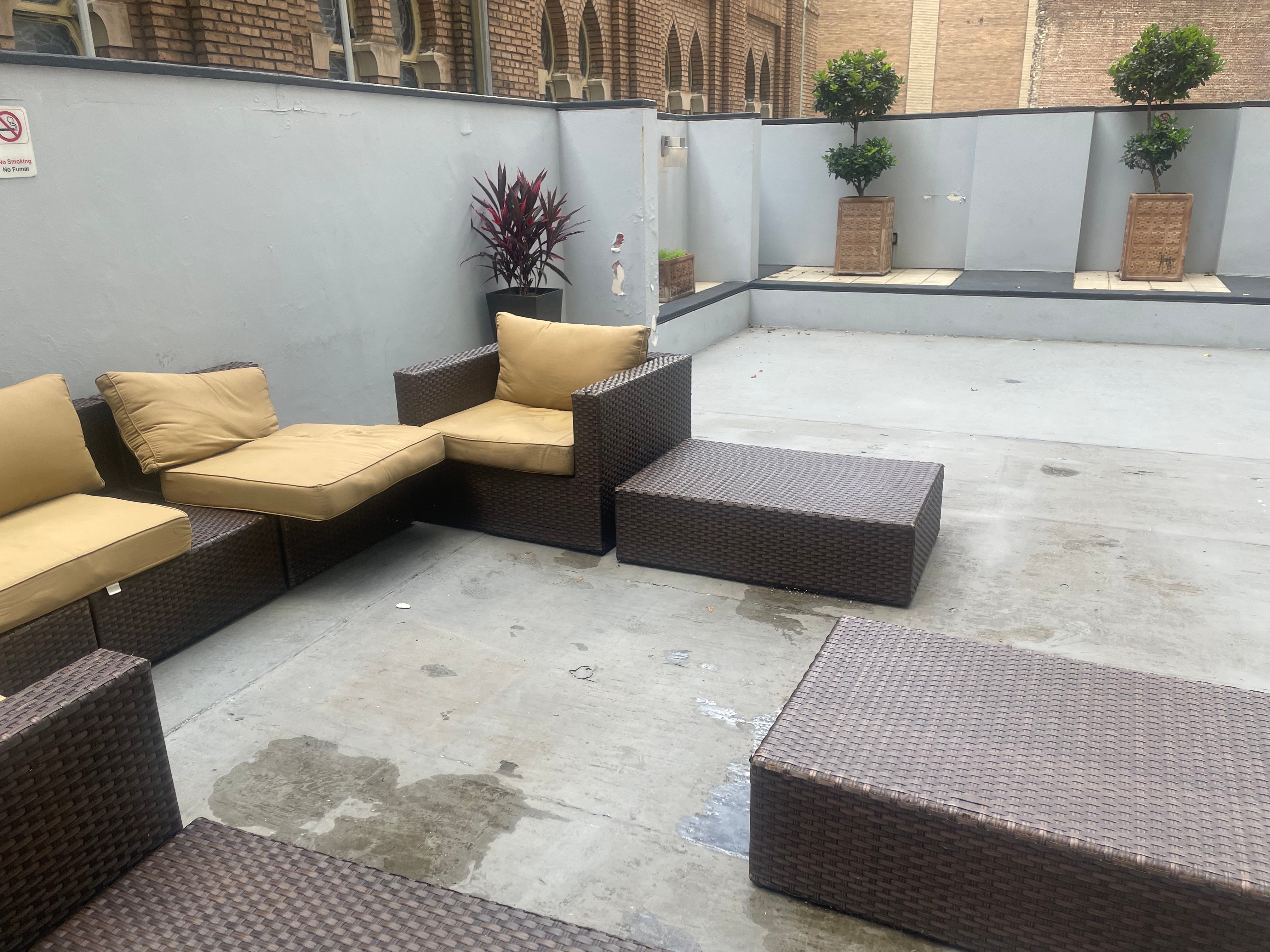
That is such a TAoN environment! This is no mind-blowing National Park or tourist attraction; it is a space that nobody celebrates. And yet of course there is nature in it, and that deserves attention too! We all adjusted and took our attention seriously and experienced this place and wrote our haikus. The whole thing really made my week.
I have been looking forward ever since to the next Write Out. So I’ll be following up and sharing more Write Out 2025 details as they emerge and hope you’ll spread the word as it approaches. I also hope you’ll pass along to educators or others who might be interested. And of course these prompts work anytime, so no need to wait — just be careful about the heat!
My thanks to Christina Cantrill and Tanya Baker of NWP! Again: updates and news on Write Out from the NWP here.
Noticing is about other people, too. The Icebreaker series aims to help with that. There’s a central collection spot for all the icebreakers to date, here.
Today’s icebreaker comes from reader Sergeant First Class Marc D. Simon, US Army Reserve:
If you left home and forgot one thing, would you rather have forgotten your cell phone or wallet?
SFC Simon is on Instagram @marcdsimon. Thank you!
Please send your favorite icebreaker (whether you made it up or found it elsewhere) to consumed@robwalker.net.
IN OTHER NEWS
Bullshit Remover. Interesting tool. Via Recomendo.
Stephen Colbert talks about faith and comedy in response to a question from Dua Lipa, video starts at 3:40 or so. How laughter helps us combat fear. It’s quite something!
Coney Island, late 1960s/early 1970s.
“No matter what we do, it is as if we cannot disappear. We can always be found.”
Circe Irasema sculptures, really nice.
Readers interested in the fascinating phenomenon of synesthesia may be interested in learning more about the new movie Magnetosphere.
Obit quote of the week, Chuck Mangione: “Dizzy taught me that if you want to just play whatever you want to play without considering the audience, fine. But if you want to get paid, you’re now in a different ballgame.”
Art that responds to nature, on Street Art Utopia:

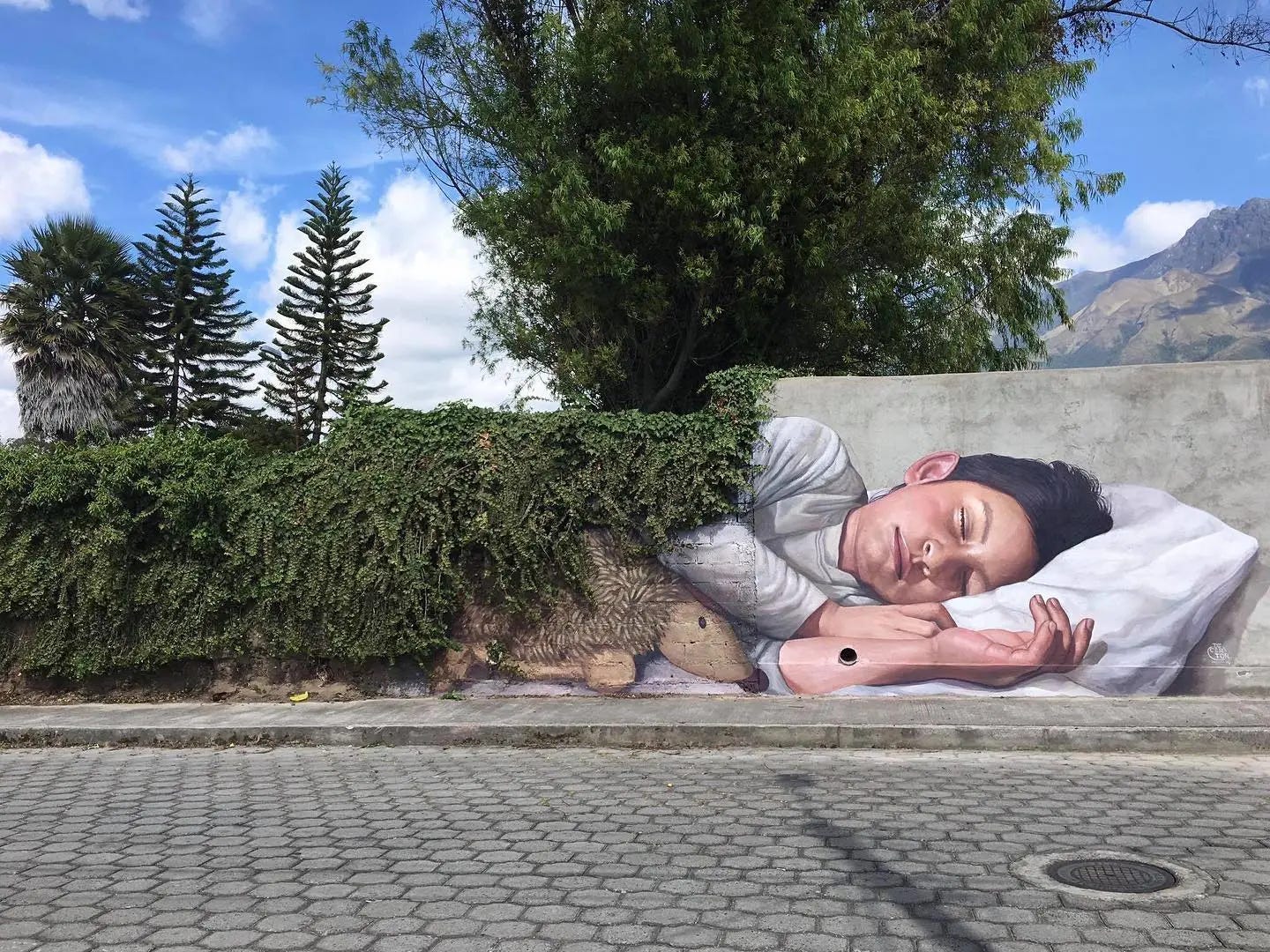
OKAY THAT’S IT!
As always, I value your feedback: suggestions, critiques, positive reinforcement, etc. Constructive insults may be directed at me, not at anyone else. I also welcome your tips or stories or personal noticing rituals, things we need a word for, and of course your icebreakers, at consumed@robwalker.net. Or use the comments.
—> Tell someone about TAoN! Or just click the heart symbol. That always makes my day.
And thanks for reading …
rw
RobWalker.net | NB: I use (some) Amazon Affiliate links
All this by Rob Walker PO Box 171, 748 Mehle St., Arabi LA 70032. Send me mail!
To unsubscribe see the bottom of the email, or go here.

The National Write Out sounds fun! We did a “Wild West road trip” when my boys were 12 and 15 and I knew any kind of writing/journaling would be challenging for them, so I suggested haikus. They ended up as funny blurbs of things we saw, nothing terribly literary, but that give us all joy now to look back. Here’s a sample, this one from Grand Teton NP: one giant moosen, blocking our path to Phelps Lake, moose has right of way.
Im a NWP fellow from 20 years back. My summer with the project informed the rest of my teaching career. So glad to see them featured.